Can one’s political beliefs disqualify one’s profession of faith?
A question I’ve been asking a lot lately is if a Christian’s political stance can ever expose their faith as being compromised? I know this question risks offending modern sensibilities. And I want to be clear that this question isn’t about partisan loyalty or social identity. But I haven’t been able to escape this question. In light of how Christians are behaving, I think it’s necessary to call into question the meaning of Christian discipleship, conscience, and one’s submission to the lordship of Christ. Faith isn’t just a private sentiment. It shapes how we think, act, and live. So, when Christians justify positions or actions that contradict the teachings or life of Jesus, they clearly expose that their allegiances are to worldly powers.
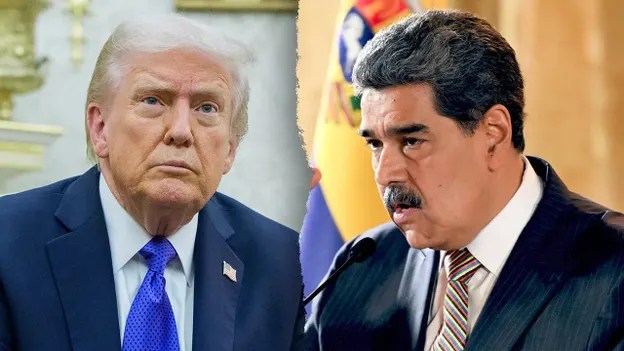
I was reminded of this nagging question during the firestorm of controversy that erupted during America’s military action in Venezuela. A friend raised concern over my use of quotation marks around “Christian” regarding those celebrating America’s actions in Venezuela. His point seemed to be that political disagreement among believers should remain an “in-house” matter. While well-intentioned, this mindset risks flattening faith into tribal loyalty rather than living obedience to Christ. The stakes go far beyond political etiquette: they are about whether faith truly governs life or is subordinated to ideology.
So, to answer the question itself: “yes”, I believe a person’s politics can outright disqualify their profession of faith. For our faith to be legitimate it must necessarily shape our life. Jesus taught that his disciples must build their lives on his teaching (Matthew 7:24–27). James taught that a barren faith is dead (James 2:14–26). So, when someone professes Jesus as Lord while persistently living out political commitments that contradict his life or teaching, that contradiction matters. While their ultimate standing belongs to the Lord alone, it cannot be said that their conduct is Christian.
I think it must also be said that I believe making this distinction is actually necessary to preserve the meaning and substance of the Christian faith. If everything can be called Christian, then being Christian means nothing. However uncomfortable this is to modern sensibilities, Christianity has always claimed an objective meaning. Confession, allegiance, and practice are not infinitely elastic.
So, how do we test if something – including our politics – is outside the Christian faith? I believe there are three interconnected authorities that judge whether something is Christian or not. First, we must listen to the teaching of Scripture. Second, we must listen to the teaching and witness of the Church. And third, we must listen to the personal conviction of the Holy Spirit. And we cannot separate or isolate these three authorities without distortion.
So let’s explore these three authorities further before we apply them to what’s happening in Venezuela.
When it comes to Scripture, I look at the relevant passages and consider their possible range of meaning. Scripture, by the very nature of written language, allows for a range of faithful interpretation. That range can be traced by following the natural interpretive steps of language and allowing the Biblical authors to reach their own conclusions. Any position that fits within that natural range has a valid claim to the Christian faith, even if we strongly disagree with it. But a position that breaks or rejects that range can be dismissed outright as objectively invalid.
When it comes to the Church, I look at the fruit that comes from how the Church has taught and applied Scripture to the community of God’s people. Christians are not merely saved individuals, but rather, we are a saved people with a shared understanding and conscience. God has worked within his people to shape us. And, as fallible as we are, his work in us must not be ignored. So, I listen to what Christians have said across time and bring their witness back to Scripture to test the fruit of her witness. And this is important: Jesus taught that a tree is known by her fruit and wisdom is vindicated by her children. When I test the teaching of the Church by Scripture, I’m not simply looking for agreement with one particular interpretation or another, but rather, I’m looking at whether or not their teaching produces the fruit that Scripture calls for in the community of God’s people. This distinction is vital in guarding against creating a loop here that would flatten the Church’s teaching down to mere dogma. The Church proves the truth of her teaching by the fruit of her life!
And finally when it comes to the Holy Spirit, I listen to the conviction of the Spirit in my heart. I believe that God’s work on the individual person matters as much as his work in both divine revelation and Church tradition. Wherever one of these dimensions is rejected or minimized, an unhealthy imbalance is created. Hyper collectivism is just as dangerous as hyper individualism. So, because I believe God has proved himself to be at work in my life, I pay attention to the Spirit’s conviction in my heart. I believe that the Spirit has restored and renewed my conscience to be sensitive to the things of God. I believe he has delivered my conscience from its bondage to dead works. And I believe he has enlivened my Spirit so that I can understand the things of God and know the things of Christ. And, as fallible as I am, I believe that I am nonetheless a child of God.
Okay. So now let’s apply these tests to the question above in the specific context of America’s military action in Venezuela so that we can identify the kind of responses that clearly place us outside the Christian faith.
Let’s first begin by testing America’s military action in Venezuela against Scripture. To do this, we must remember that we’re not looking for a political position defined in Scripture, which is not something Scripture often provides, but instead, we’re looking for the relevant passages that provide the principles that will shape how we think about this question, and then we’re considering the range of possible meaning in those passages to determine the limits of the principles we can take from Scripture. And when we do that, we find that Scripture affirms both that governing authorities exist under God’s sovereignty and that God uses even unjust nations as instruments within his providence. Yet Scripture is equally clear that divine sovereignty never equals moral approval. The same texts that affirm God’s rule over kings also announce judgment on nations for violence, arrogance, and injustice. Government authority is real, but it is defined and limited: rulers are accountable to God for acting justly, protecting the vulnerable, and restraining evil, not for expanding power or sanctifying domination. Within this biblical range, Christians may disagree about whether a specific military action serves justice or violates it, but it’s necessary that we actually wrestle with that question. However, what clearly falls outside Scripture’s range of Christian response is any position that treats state violence as inherently righteous, beyond moral critique, justified simply by divine sovereignty, or as being of little consequence. Again, Scripture does not allow Christians to celebrate state violence, dehumanize their enemies, equate faithfulness with national loyalty, or to claim divine certainty for political judgments. Any response to America’s military action that requires these moves breaks Scripture’s range of meaning and therefore cannot claim Christian legitimacy.
Let’s continue by looking at the witness of the Church. Again, I’m not looking for unanimity or a single authorized political conclusion. We have seen within the Church traditions that both permit limited use of force and call the people of God toward nonviolence and nonresistance. What matters for my purposes is not simply what positions the Church has held, but what kind of people those positions have formed. I believe it’s Scripture’s role to reveal doctrine and the Church’s role to prove truth by the fruit of her life. Measured this way, the Church’s most compelling and enduring witness has consistently come from those streams that resist the sacralization of violence and refuse to baptize state power as inherently holy. Across history, whenever the Church has closely identified herself with national force or imperial ambition, her fruit has tended toward pride, power, dehumanization of enemies, and the silencing of conscience. By contrast, communities shaped by costly-love, peacemaking, hospitality to the outsider, and a willingness to suffer rather than dominate have borne clearer witness to the crucified Christ. This by no means disqualifies outright anyone who affirms the legitimacy of state force, but rather, it warns that Christian entanglement in worldly powers can lead to disqualifying fruit. So we cannot embrace the teachings that have historically entangled the Church in worldly entanglements.
Finally, I listen to the conviction of the Holy Spirit in my own heart. I take seriously the moral weight of his conviction in my life. I believe he has restored my conscience, freed it from bondage to dead works, and made me capable—however imperfectly—of discerning the mind of Christ. This does not make my judgment infallible, but it does make it morally meaningful. Applied here, I cannot ignore the Spirit’s resistance within me to the celebration or justification of state violence, especially when it is framed in triumphalist or nationalistic terms. The same Spirit who teaches us to cry “Abba, Father” also presses us toward costly-love, humility, and a willingness to suffer rather than dominate. When I feel my conscience strained—when my heart recoils at dehumanization, coercion, or the easy invocation of God’s name to bless force—I take that seriously as spiritual warning. I cannot claim that my conviction binds every Christian. But neither can I deny it in order to maintain political unity or social belonging. If the Spirit has truly been given to the children of God, then a position that requires the suppression of conscience, the hardening of compassion, or the numbing of grief over violence cannot be squared with life in the Spirit, even if it is defended as prudent, realistic, or necessary.
Having outlined these three tests — Scripture, the witness of the Church, and the conviction of the Holy Spirit — I believe it’s important to now stand behind my claims and name the specific posture I believe fails all three.
Some Christians are taking a nationalistic stance that entangles political power with divine approval. In this posture, President Trump is defended by an appeal to him being “God’s chosen” rather than by moral evaluation of his conduct, and biblical warnings about violence, arrogance, and injustice among the nations are functionally set aside and ignored. This stance replaces moral discernment with political loyalty. The fruit of this posture is the normalization or celebration of violence, the dehumanization of perceived enemies, and a diminished capacity for grief, repentance, and mercy. Over time, their conscience is dulled rather than sharpened, as compassion is reframed as weakness, and faithfulness is measured by political allegiance rather than conformity to Christ. On these grounds, such a posture cannot credibly claim to be Christian in substance, even if it retains Christian language. So I believe it’s necessary that the Church confronts and rejects any posture that compromises what it means to be Christian.


While I understand the emotions and heartfelt beliefs behind your words, we must be careful not to discount the work of the Holy Spirit in the lives of those that we disagree with.
LikeLike
You are absolutely correct. That’s why I’ve made two careful distinctions: first, I’m talking about confronting and rejecting specific postures, and second, when doing so, I’m talking about condemning conduct and not souls. The consequence of not doing this is to lose what it means to be Christian altogether. If we don’t call out specific behavior as being incompatible with the Christian faith, then we admit such behavior as Christian and lose the meaning of our faith.
So, I fully affirm the caution to remember that God may still be at work in the life of someone who isn’t yet aligned with his way (I’m living proof of that), I would embrace that caution with another caution, that we not permit that recognition to cause us to affirm incompatible conduct as being Christian. God is working to save sinners. But when he does save them, they do not persist and continue in unconfessed, unrepentent rebellion and lawlessness. Some passages that deal with this topic would be found in 1 John 3. But I trust there’s already some agreement there.
Again, thanks for the comment and the true word of caution.
LikeLiked by 1 person
I appreciate that we can discuss heated topics in a respectful manner.
LikeLiked by 1 person