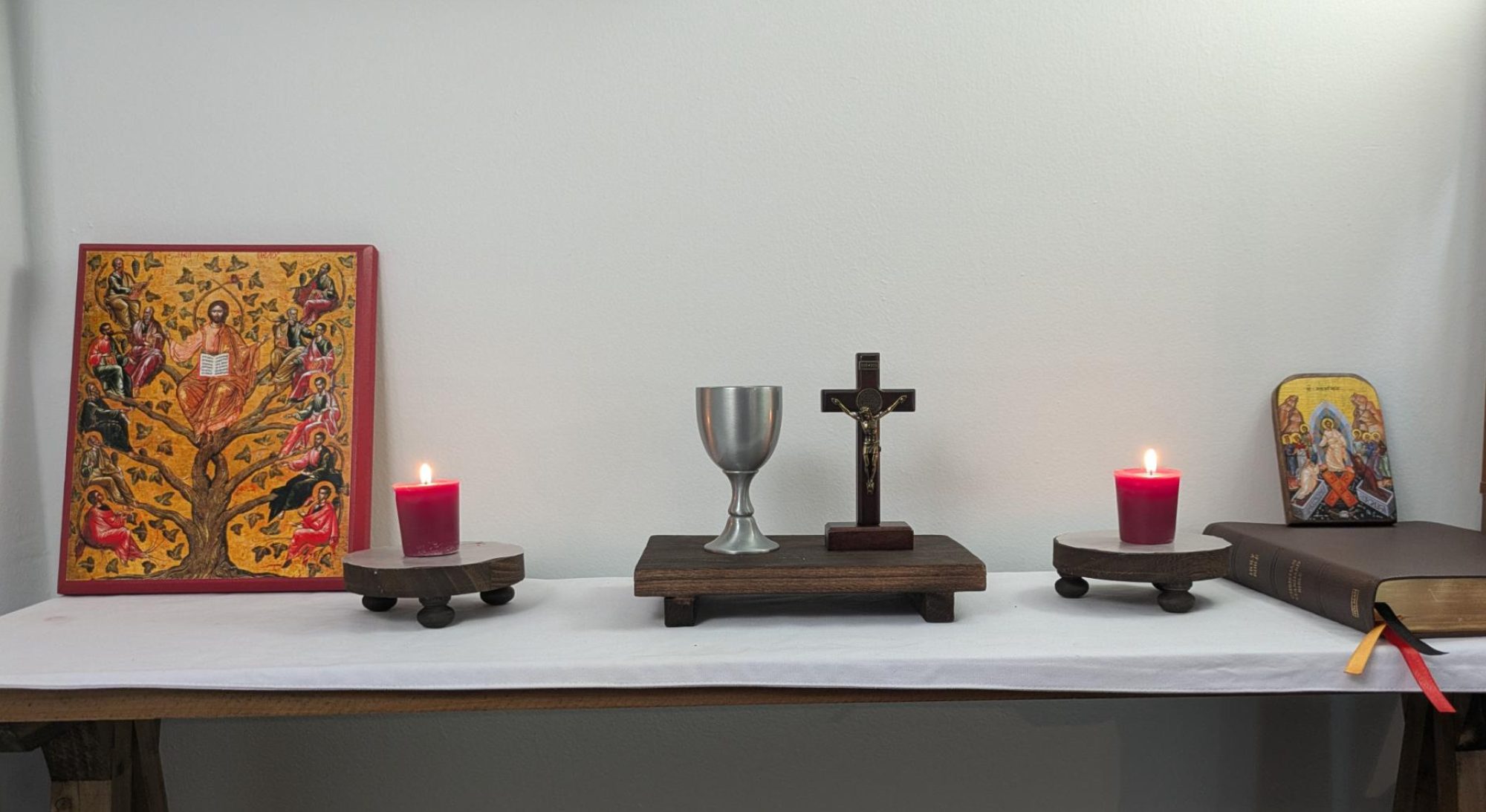

We know what it feels like to start a home-church. We understand the feelings of reticence and doubt. We have experienced the isolation. We have heard the condescending remarks about going to “real church.” But, we also know the intimacy of authentic fellowship. We have experienced uncompromising worship. And we have received the blessings that come from being in a community of committed believers who really know each other and use their spiritual gifts to build each other up in the Lord.
You can read about our journey to starting a home church here if you want to, but this page offers resources that are designed for the home church setting. They are designed for robust discipleship and Christian formation. And they are all resources that have been used in the home church on the mission field — both abroad and in the States — and are freely provided to help those God is leading into home church ministry.
Here’s an example of how we use these resources.
The Liturgy shapes our weekly gathering and is easy to follow. We then feed texts from the weekly chronological Bible plan into the “readings” and “teaching” sections of the liturgy. This minimizes the work required by those facilitating the home church meeting. The daily readings help provide every member contextual depth for the text so that they have natural insights to contribute during discussion periods.
The result is a simple service with a structure that people recognize as “Christian” but feels natural in the home.
We then layer other resources like the Articles of Faith and Practice or the Christian Foundations Charter into our discipleship program to ensure that we are cultivating theologically and morally robust disciples.
Please feel free to reach out and connect with me if you need help understanding how home church works.
Resources
Home Church Liturgy. This is, perhaps, one of the most practically useful resources we have because it provides an intentionally and carefully designed order for the home church that upholds biblical teaching, cultivates deep spiritual realities, and encourages meaningful fellowship.
Chronological Bible Reading Plan. This is another one of our most practically useful resources because it brings the whole home church together around a shared Bible reading plan. This plan moves chronologically through the Bible in one year. We have provided an adult guide with 365 assigned readings for the home. This plan can be used as one’s private reading schedule or incorporated into a family reading schedule to help families read the Bible together. But it can also be used to populate the home church liturgy’s “readings” and “teaching” texts. When used in the home church, this plan integrates what the family is doing throughout the week into the worship service so that the reading, teaching, and discussion of the home church service are the natural extension of the church’s spiritual life. This makes the Sunday assembly feel like the natural climax of the whole church’s life.
Children’s Reading Plan Coming Soon: My wife is a trained early-childhood educator. She has been working on integrating this chronological Bible reading plan into one that children can follow so that they can participate in the life of the church as well. We have tried to refine the reading so that the children will cover the essential highlights of the story without having to read the full text. I will upload this as soon as it’s finished.
Articles of Christian Faith & Practice. This meets one of the most overlooked needs within typical home churches as it forms a coherent and concise theological vision for the church that is useful in discipleship and leadership formation. One of the reasons that many home churches fail over time is because they do not train their members with strong Biblical convictions or raise qualified leaders for the future. Likewise, home churches face many dangers that threaten to destroy them from within, chief of which are the temptations to drift towards private interpretations and niche opinions. So, home churches that grow spiritually and multiply by making disciples must have a clear, robust theological vision that allows them to both train their members and identify and stand firm on the truth. Therefore, these articles of Christian faith lay out the foundational truths of the Christian faith and practice alongside the Biblical references from which they are drawn, which allows your home church to expand, modify, and consolidate these articles to fit your core convictions. These articles can also function as a topical Bible study guide for new churches that need to explore the faith to find out what they believe.
Foundations of Christian Unity. This addresses one of the most challenging doctrines of Scripture that many home churches wrestle with: “the unity of the Christian Church.” Home churches not only struggle with feelings of isolation, but often wrestle with the temptation to believe that they are the only true Christians. Sometimes they (rightly) don’t want to compromise the Biblical teachings and practices that they feel have been compromised by modern institutional churches. And sometimes they are (rightly) seeking the authenticity of fellowship that is so often — but not always — lacking in today’s churches. But they struggle to have a vision that justifies separating from the modern institutions while still affirming them as brothers and sisters in Christ. This document provides that vision. It provides a biblical framework that allows us to work through differences between Christians in practical terms, recognizing what separates us and what unites us, and seeing clearly where unity is broken by real apostasy.
A Theology of Worship Spaces. This shorter work addresses the question of the home church’s worship spaces. Home churches often (rightly) recognize that the Church is not a building. But they can sometimes think that means that our meeting spaces have no meaning at all. There are also answers to questions about meeting in small apartments, how to host larger meetings in family living spaces, what to do when the home church outgrows the home and more.
Why We Are Starting A Home Church. This letter answers why we decided to start a home church. I always encourage those who decide to start a home church to write a letter so that they can hear their own vision for ministry. This can force some uncomfortable conversations. But it can also force some honesty that will be healthy for the work of ministry that will happen over the years and decades to come.
What Is the Church? This letter explains how we understand the universal Church that was founded by the Lord Jesus Christ. It follows the letter about why we’re starting a home church and shapes our identity as a home church in light of our participation in the one, universal, and apostolic Church. I believe it’s vital for home churches to understand their identity in view of the universal Church so that they do not suffer what I call an identity-crisis, which happens where some home churches to devolve into affinity groups that show no resemblance to the Biblical practice of the Church. An unclear vision of the universal Church is unclear makes it very difficult for home churches to rightly see ourselves in connection to it.
A Christian Foundations Charter. This charter outlines the moral precepts of the Christian faith to combat what we believe has been an over correction among Protestant churches against the errors of legalism. Many modern churches have lost sight of the biblical commands from our Lord that shape and inform Christian life. I wrote this as a guide to protect my family from today’s moral confusion.

