Home churches are very diverse. Some are small groups of two or three families. Others have twenty or thirty people in them on any given Sunday. They might meet in houses or apartments. But most home churches are small. And small groups present their own set of unique challenges. So let’s talk about one of those challenges today: absences.
Being small means that the absence of even one person can be profound. There are no invisible people in home churches; everyone matters. So, many home churches struggle to maintain consistency when absences disrupt their community. And, in today’s busy world, absences are almost certain to occur!
So, what do you do as a small home church when a significant portion of your group is absent?
Sunday morning dawns and you wake up to text messages telling you that a significant portion of your group are going to be absent today. You love everyone and know that their reasons for being gone are sincere. You just have to decide what to do now.
The easy thing is to call it for the week. You can shoot out a message to the remaining members and explain that the group is just going to postpone till next week. And, honestly, the home church model is remarkably flexible. I very much understand this temptation. So you can get away with doing this a few times. But, I also know the blessings that come with faithfully gathering week-in and week-out. And, having worked in the home church context for over 11 years, I can tell you that groups who regularly fail to assemble eventually implode.
This is why I wrote the Home Church Liturgy, because I know what it’s like to wake up to messages from almost everyone giving you a heads up that they’re not going to be able to make it that week. We have improvised these “micro-meetings”. We have postponed them. And we’ve tried to act like nothing happened and just do them as normal. What I’ve learned through the years is that small meetings have their own, unique needs. They need to be genuinely meaningful, not just a ritualistic or performative placeholder for when “the church is back”, they need to be sufficiently flexible to accommodate the realities of those present, and they need adequate structure to anchor their flexibility and guide the service in meaningful practice.
A liturgy simply means “the work of the people,” and this liturgy reflects the conviction that Christ is always active among his people. He gathers his Church. He speaks to his Church. He hears his Church. He teaches his Church. He feeds his Church. He loves his Church. And he sends his Church. But also that his people gather around him. His people listen to his voice. His people cry out to him. His people learn his ways. His people partake of his body and blood. His people love each other just as he loved them. And his people are sent out under his authority into all the world. What I’ve learned is that these convictions provide the meaning, flexibility, and structure necessary for the church to meet no matter how few or how many are present.
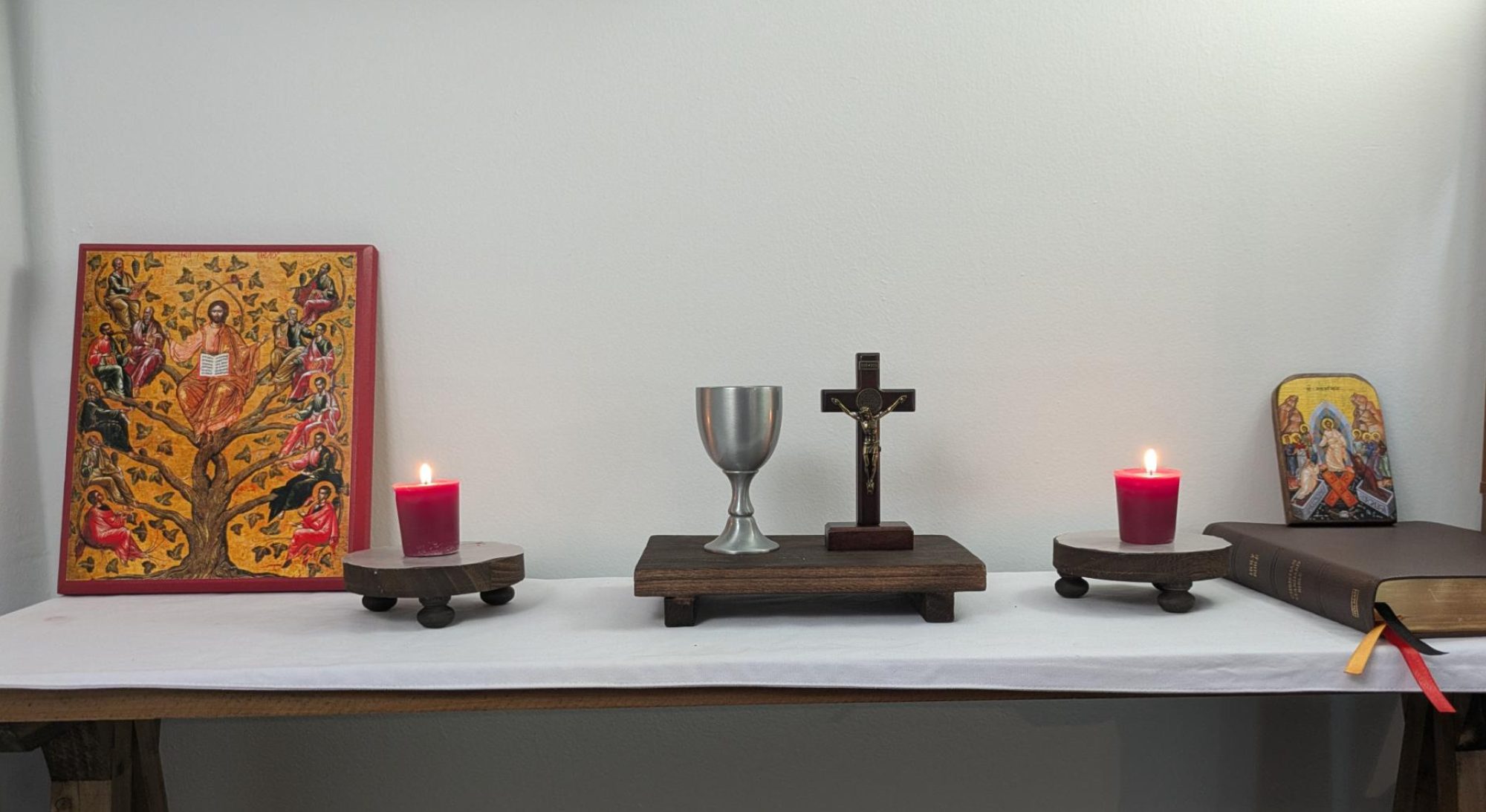
This liturgy moves along seven movements: 1) the call to worship; 2) the readings; 3) the prayers; 4) the teachings; 5) the Lord’s Supper; 6) the fellowship; 7) the sending. These seven movements are simple-but-intentional.
The call to worship reminds those present that they are not there by accident, but are present by the real invitation of the Lord Jesus Christ. This understanding anchors the significance and meaning of the gathering in the real presence of the Lord rather than merely in the number of people physically present. The call to worship scripts, as with all these scripts, systematically build this understanding over time. Whoever facilitates the meeting can be flexible with these scripts, but even when they are kept simple, if they are believed, we have seen first hand how they are profoundly meaningful.
The readings are where Christ speaks to his gathered Church through the reading of Scripture. We have designed the scripts and response to reflect the belief that it’s Christ speaking to us during the reading of Scripture. And this is meant to attune our attention to the authoritative word of God.
The prayers are where Christ listens to his gathered Church, who responds to him in sincerity of heart. Again, the scripts are designed to systematically build over time our understanding of prayer as being when the Lord hears his people. Whether there are 10, 5, 30, or 2 people present, this time of presenting our prayers to God is meaningful to those who believe that God is listening.
The teaching is where Christ teaches his gathered Church through those present who are able to teach. We believe that teaching is a gifted function of the Church. There are times when absences mean that simple Scripture readings are better than teaching because the teaching members of the body are not present. So, this movement can be placed directly after the readings and conducted as discussion when the teaching members of the body are not present. Done in this way, the discernment of the Holy Spirit about the mind of Christ in Scripture can still bountifully bless the body through those present when the Scriptures are opened up for discussion. But, when the teaching members of the body are present, then they should simply amend their teaching plan to what feels natural for those present.
The Lord’s Supper is where Christ feeds his gathered Church by offering them his body and blood. We do not believe that the Lord’s Supper is held hostage to the presence of a bishop, elder, or pastor. The Lord’s Supper is freely offered to his people by the Lord himself. So we partake of his table believing that he has set the table himself for all his people. And this is our central reason for coming together. Even if, for some strange and inexplicable reason, we were forced to forgo all other elements of the assembly, sharing together in the Lord’s Supper would still be a sufficient reason to gather together. And the scripts of this movement systematically build this understanding over time so that each member, no matter how few are present, may receive this faith.
The fellowship is where Christ loves his gathered Church through each individual member of the Church. Whether there are two people or twenty, this is where each member has the opportunity to minister the Lord’s love to others. There have been times where I have met with just one brother, and the encouragement of the fellowship was profound. We ordered pizza, which we kept warm in the oven, during the service, and just ate pizza during this time instead of our usual soup because the cooking members of the body were gone. But the fellowship was still meaningful.
The sending is where Christ sends his gathered Church to accomplish their mission in the world. We do not believe that “church is over” after service. Rather, we believe that the Church is “on the move” and “marching” after service! So this movement, as short as it is, occupies that place of reminding the church of her mission and blessing them in that endeavor. This movement gives our meeting a sense of both “closure” and “purpose moving forward.”
So, you wake up this Sunday to messages on your phone telling you that almost everyone will be unable to make church today. Let me encourage you not to just postpone to next week. Sometimes you might need a week of rest, and that’s fine. But, let me encourage you to meet with those who are present to receive the blessings that Christ ministers to his people when he gathers them in his name!

