Sometimes people ask me why I include Catholics and Orthodox as my brothers and sisters in Christ as a Protestant. This question makes a lot of sense to me because I was raised with the mindset behind it.
I grew up in the churches of Christ, with a strong emphasis on having a biblical faith. We were taught to resist novel doctrinal innovations arising from ecclesial tradition. And I remain grateful for this upbringing because I firmly believe that Scripture is the highest infallible expression of the Lord’s authority in the Church. No church authority is permitted to supersede what has been given to us in Scripture.
So when someone questions how I can recognize both Catholics and Orthodox as fellow brothers and sisters in Christ, I understand where they are coming from. I have studied historical examples of atrocities committed by the Catholic Church during the inquisitions and crusades. I understand the abuses of power that can arise when salvation is understood as dependent on the Church rather than on Christ. But it is precisely my Protestant conviction that salvation comes from Christ that leads me to my conclusion.
Who Defines the Boundaries of Christ’s Church?
This question touches on one of the defining disagreements between Protestants and the Catholic and Orthodox traditions.
The question is not meant to separate Christ from his Church. Protestants affirm that the Church is Christ’s body and that those who belong to him are joined together in one body through the Holy Spirit. We also affirm that one cannot claim to love Christ while disregarding the people he has redeemed. However, Protestants distinguish between belonging to Christ and belonging to a particular ecclesial institution or tradition. We make this distinction on the authority of Scripture.
One of the compelling reasons for the Protestant Reformation was the concern that salvation had become too closely bound to the institution of the Roman Catholic Church and its authority, contributing to serious abuses of ecclesial power. The Reformation insisted that sinners are reconciled to God through Christ, not simply by virtue of their submission to a particular church institution.
However, we have to pause here and examine whether Protestants have unwittingly recreated the same problem within our own traditions. Have we begun treating the boundaries of our particular institutions as though they were the actual boundaries of Christ’s kingdom?
Protestants approach this question differently from Catholics and Orthodox, but we can fall into a similar trap. We define the boundaries of Christ’s kingdom according to how we define the boundaries of the faith. Because we are saved by grace through faith, we can unintentionally set the boundaries of the Church around our particular understanding of the faith. In doing so, we make our own tradition the standard for interpreting the faith—a tendency we criticize in other traditions—and discount the mercy of God toward those who hold doctrinal errors.
Take, for example, the particular understanding of baptism in the tradition in which I grew up. Baptism was understood as the occasion in which salvation is received by grace through faith. This affirmed that salvation remains God’s gracious work while insisting that faith responds in baptism. Yet we drew the defining line of the Church around this point so finely that we excluded even those who misunderstood the order of salvation, believing they were saved at the moment of faith and were baptized afterward.
I began to see this only after entering into serious but generous doctrinal discussions with other Protestants about baptism. Some Protestants almost scoffed at the idea that baptism was a significant part of God’s work. Others, however, took baptism seriously while placing the point of salvation slightly before where I placed it.
What I began to realize was that the question isn’t whether doctrine matters, but whether every doctrinal error places someone outside the saving work of Christ—that is, outside the universal Church.
I think it is beyond dispute that doctrine matters. Our beliefs shape our worship, our conduct, our understanding of the gospel, and our life together. This is why false teaching must be confronted, and the Church must continually test her teaching and practice against Scripture, which remains the final authority for Christian faith and life. But if we admit that Christians can belong to Christ while holding some degree of doctrinal error, then we must allow our understanding of Christian unity to reflect that reality. If we refuse to admit this, we must explain both where we draw the line and why our own understanding of that line should be treated as infallible.
One might rightly object that all Christians, including me, have to draw some doctrinal lines. For example, I don’t recognize Mormons as Christians. But there is a difference between drawing lines around the distinctive teachings of our own traditions and recognizing the central tenets of the historic Christian faith as they arise from Scripture.
There are heretical groups that depart from the Christian faith in our day, just as there were in John’s time, when he warned that “Everyone who does not abide in the teaching of Christ, but goes beyond it, does not have God” (2 John 9, NRSV). I’m not virtue signaling when I say that I believe doctrine matters; I genuinely believe it matters! We aren’t free to invent our own revelation or depart from the teaching of Christ. But this doesn’t mean that every distinctive teaching of our traditions is equivalent to the doctrine of Christ.
There are disputable matters in our day, just as there were in Paul’s time, when he commanded that we “welcome anyone who is weak in the faith, but don’t argue about disputable matters” (Romans 14:1, CSB). Therefore, we can affirm that the historic Christian confession of the Triune God, the identity and saving work of Jesus Christ, and the moral demands of the gospel are not optional details while also recognizing that our distinctive positions on disputable matters are not inherently binding on all Christians.
My contention, then, is that we must guard against expanding the doctrine of Christ to include every disputed particular of our traditions. Confessing that Jesus is God incarnate is not the same as asserting that salvation occurs before, at, or after baptism. When we speak of the defining boundaries of the faith, we must distinguish the core tenets of the historic Christian faith from the particular interpretations that divide Christians.
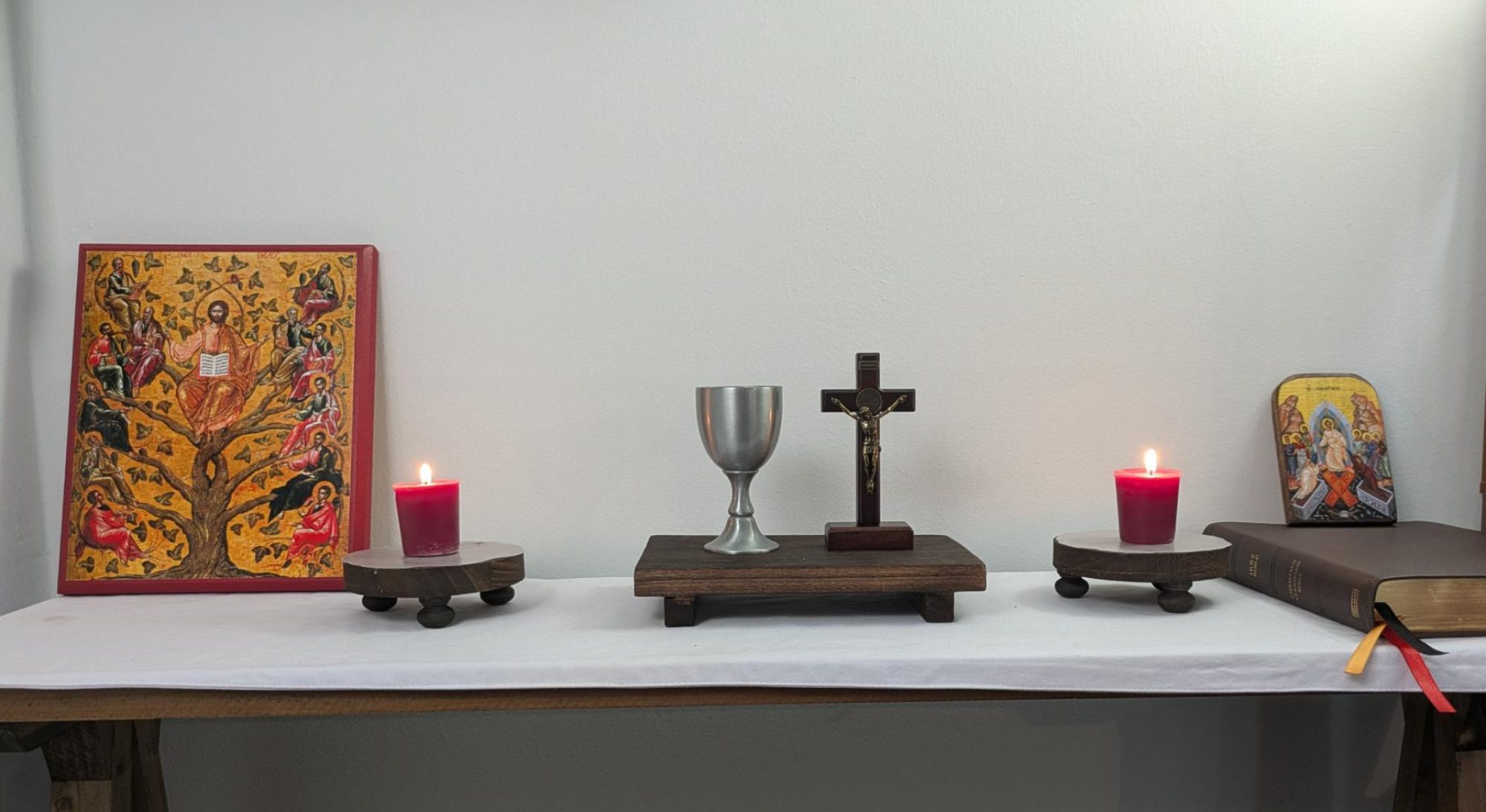
This has produced my conviction that the Church is one body, rooted in Jesus Christ and expressed through many branches. Jesus’ parable of the mustard seed offers an image of the kingdom that can help us reflect on this reality (Mark 4:30–32). Catholic, Orthodox, and Protestant traditions are real branches with distinct histories, teachings, strengths, and weaknesses. No branch is the whole tree, and no branch is beyond correction. We must be willing to recognize error wherever it appears, including within our own tradition, while refusing to claim for ourselves the authority that belongs to Christ. And when we recognize error in other traditions, we must respond with the gentleness, patience, and respect required of us in Scripture.
Far from being theological indifference, this is an attempt to hold truth and love together because I take seriously the commands of Scripture placed upon us as followers of Christ. We must correct one another, pursue holiness, and guard the gospel. But we must also approach one another with humility, mercy, and patience, recognizing that our own understanding remains subject to the Word of God.
The Challenge
I believe there is a very real and present danger in both creedal and ecclesial loyalty: their capacity to blind us to the reality of the judgment seat of Christ, before which we will all stand.
Take a moment to consider the exchange in John 8:31–59. Jesus told those who had believed him that they would know the truth and be set free if they continued in his word. Yet, when he challenged their claims about their spiritual heritage, they appealed to Abraham as their father.
John 8:39 (NRSV): They answered him, “Abraham is our father.” Jesus said to them, “If you were Abraham’s children, you would be doing what Abraham did…”
The passage concludes with those who had been engaging with Jesus picking up stones to kill him.
This is the same challenge we face today. When we are confronted by the word of Christ, we are tempted to hide within the shelter of our traditions. But those traditions will be of no use to us if we refuse to hear Christ’s words and will not make us immune to his judgment.
To illustrate this point, I want to use an example that I believe is common to all three traditions of the Christian Church. When we survey the landscape of the Church, we find beautiful edifices, elaborate furnishings, historic treasures, and substantial institutional resources. Some preserve our history, express great craftsmanship, or serve our worship of God. But we can also use the religious significance of these things within our traditions to shield them from accountability to Christ’s judgment.
For example, Jesus said, “Blessed are you who are poor, for yours is the kingdom of God” (Luke 6:20, NRSV), and also warned, “But woe to you who are rich, for you have received your consolation” (Luke 6:24, NRSV).
These words demand an examination of both our lives and our institutions.
A right disposition toward Christ asks what it means for a Church to proclaim the good news of reconciliation while accumulating wealth. What does it mean to honor him with costly buildings and sacred objects while people made in God’s image struggle to obtain food, shelter, medical care, and the basic necessities of life?
Unfortunately, it can be easier to say, “We are Catholic,” “We are Orthodox,” or “We believe the right creed” than to stand up straight and examine whether we are continuing in Jesus’ word as his disciples.
This brings us back to the question we are considering. The way we define the Church can expose us to the same deception of religious heritage that Jesus confronted in John 8. We cannot simply say, “I am Catholic,” “I am Orthodox,” or “I believe the right creed.” Scripture repeatedly rejects the idea that religious identity or inherited status can substitute for faithfulness to God.
Therefore, recognizing Catholics, Orthodox, or Protestants as my brothers and sisters in Christ is not to say that every person or leader within these traditions is faithful. It is to recognize that we share the historic Christian faith centered on Christ, and that we are all accountable to him.
The Church’s unity is not ultimately grounded in her traditions or creeds, but in the person of the Lord Jesus Christ, who is the root that sustains the whole tree. Our traditions and creeds exist to serve the faith once delivered to the saints, not to replace Christ as the center of our allegiance.
Therefore, the Church is ultimately defined by Christ, and we must ask whether we are being conformed to his likeness.
I’m grateful for the privilege of having met fellow Christians across these traditions who faithfully demonstrate the life of Christ in this world. I can name people I know personally from around the world in all three traditions who have confessed the name of Christ at great cost, upheld the doctrine of Christ in their faith and practice, and displayed the testimony of his good news to the world.
So I ask myself: Who am I (who are we) to condemn another who bears the name of Christ and is being conformed to his likeness?

