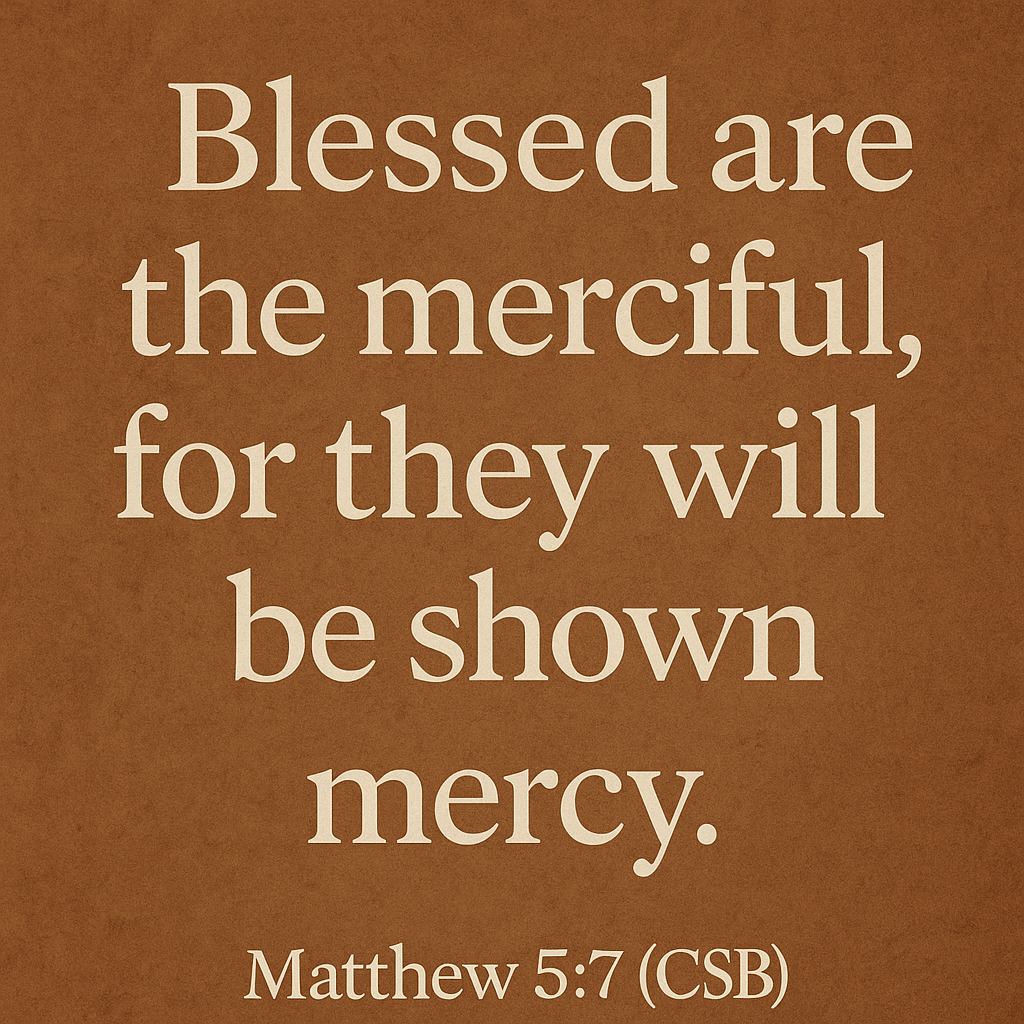
Matthew 5:7 (CSB) – “Blessed are the merciful, for they will be shown mercy.”
Mercy is often looked at as weakness, but, in Jesus’ eyes, mercy is neither weak nor compromised. Mercy is not a failure to care about righteousness, but is the outpouring of God’s heart into human lives — it’s strength made gentle, love applied to pain, and holiness that lifts people up. True mercy sets aside its own “rights” and “advantages” for the well-being of another. Unfortunately, we have neglected mercy and replaced it with tribal loyalty, moral outrage, and theological pride. We are quick to forgive those in our tribe for the very things we ruthlessly condemn in our opposition. We take advantage of every moral failure in others to discredit them and advance our own cause. And we create theological justifications for our own superiority over others. But where is mercy in our daily practice of the Christian faith?
So we need to ask, how did mercy become so neglected?
I think the answer is very simple: in today’s social media environment and raging culture wars, it’s often the tribal “truth-tellers” who get clicks and followers. And that’s what it’s about today — even (or especially) in ministry. Success is contingent on building one’s following, which is most effectively accomplished by entering the endless stream of controversies that dominate our social media landscape with bold words and sharp critiques that support one’s tribe. The formula is simple enough in concept, but the result has made the Church body sick in the same way that a high-sugar, high-carb diet makes the human body sick. We have disincentivized mercy so that we don’t pursue its blessings anymore.
Jesus believed in truth, yet he didn’t say, “blessed are the correct.” Again, Jesus was fearlessly bold, yet, he didn’t say “blessed are the bold.” There were all kinds of important attributes that Jesus could’ve blessed, but he said, “blessed are the merciful.” We need to recover this blessing. In our communities, in our disagreements, in how we speak about those who’ve fallen, or those who differ from us, or those the world casts aside. Mercy is not opposed to truth; it’s how truth is supposed to be expressed – as a reflection of God’s heart, which is “rich in mercy.”
My friends, this post isn’t meant to simply be a nice devotional; it’s the very substance of Christian life and practice. If we’ve been shown mercy, then we must become merciful. But if we refuse to show mercy, then we will not receive mercy (See James 2:13).
So, we must examine ourselves with eternity in the balance. Are we quick to show mercy, or just quick to correct? Are we living in the blessing of the merciful — or trying to follow Jesus without adopting his heart?
Return to his heart. His mercy is not a footnote. It’s the main point.

