
Scroll long enough and you’ll see it.
A viral image. A shocking claim. A name you recognize tied to something dark. A call to action: “Do not stop talking about this.”
Today I came across this post while scrolling social media:
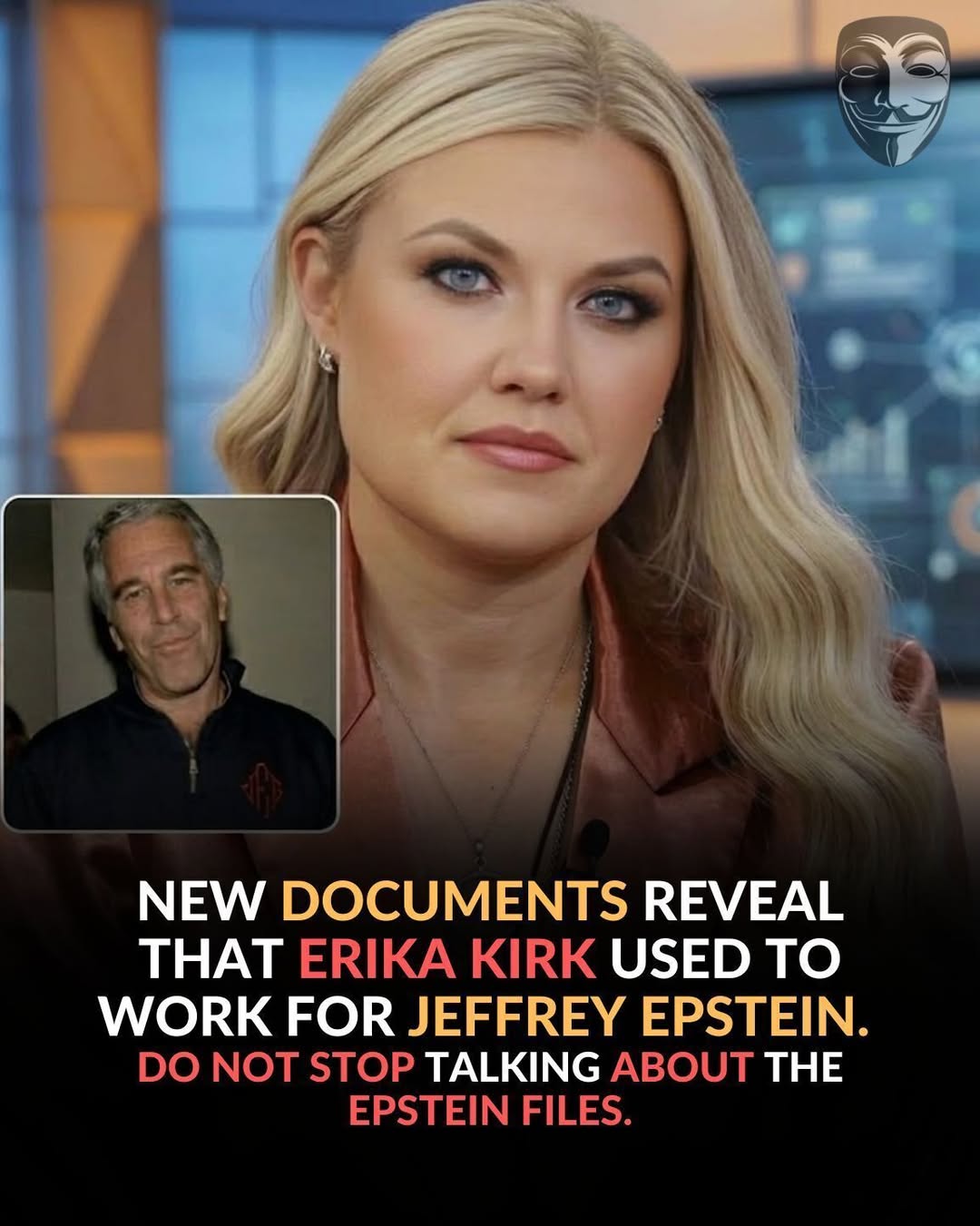
New documents raise questions about Erika Kirk’s past connections to Jeffrey Epstein 🕵️♀️📂 Recent claims circulating online suggest that Erika Kirk, CEO of Turning Point USA, may have had past connections with Next Model Management, a firm sometimes linked to the Jeffrey Epstein investigation. While these allegations have sparked widespread discussion on social media, official Department of Justice records have not verified any direct employment or criminal involvement between Kirk and Epstein’s operations. The story highlights the intense scrutiny faced by public figures when historical associations come under public examination, even without confirmed evidence.
The claim’s structure is transparent: simply connect a public figure to one of our most disturbing scandals. The point is to raise our temperature, get us to believe the claim, and then share it to our social media audience. And this model is very effective precisely because human beings are moral creatures who feel a sense of outrage when we see great injustices.
So let’s look at this more closely and ask a critical question:
What does faithfulness look like on social media when we encounter claims like these?
Truth Is Moral, Not Just Factual
Scripture doesn’t treat truth as a neutral category concerned merely with facts.
“Therefore, putting away lying, speak the truth, each one to his neighbor, because we are members of one another.” (Ephesians 4:25, CSB)
Truth is relational. It’s tied to how we treat and interact with others. Truth is deeply connected to Jesus’ teaching on neighbor-love. We must be true with others because we recognize our communal relationship with one another.
So, to speak falsely is not just intellectually wrong, but is a moral lapse in our love for one another.
The relational dimension of truth requires another attribute:
“The one who gives an answer before he listens—this is foolishness and disgrace for him.” (Proverbs 18:13)
The relational dimension of truth requires that we exercise patience and discernment in carefully listening to the case before us. In other words, accuracy matters. But so does how quickly we speak, how carefully we verify, how fairly we have heard each side, and why we are sharing something in the first place.
A Realistic View of Human Reasoning
What we’ve looked at above provides a framework for thinking about truth, but it’s necessary to realize that we don’t evaluate truth-claims in a vacuum.
We all reason from: our worldview, our prior beliefs, and our trust networks. And this is unavoidable. It’s why you can share something that you genuinely believe is compelling online and someone you otherwise respect gets hot and responds critically without hearing your case. Your claim violated or offended something in their prior beliefs, their worldview, or in their trust network. This happens when someone is defending their core interests rather than engaging with your claim.
This isn’t necessarily wrong. If you tell me that the earth is flat I’m going to defend my prior belief because I’m confident that it’s well established.
What’s wrong is when this leads us to believe lies or suppress the truth.
We have to dispel the myth of neutrality. No one is truly neutral because we all have core interests, convictions, and relationships that impact how we think and live. And we can’t betray these without becoming hypocritical, inauthentic, and disingenuous. Our beliefs, worldview, and trust networks are important to how we understand the world around us. So I’m not arguing that we shouldn’t reason from these convictions.
Instead, I’m arguing that we need to hear Scripture’s warning:
“The heart is more deceitful than anything else…” (Jeremiah 17:9)
That means two things can be true at once: it is right to reason from a worldview and it is dangerous to assume our instincts are trustworthy. We are not neutral observers. We are interested observers. And that is exactly why we must slow down because our interests can mislead us.
Why Viral Claims Are Spiritually Dangerous
Posts like the one above are powerful because they combine: outrage (a known evil like Epstein), association (connecting a new person to that evil), urgency (“do not stop talking about this”), and low evidence threholds (“new documents,” without citation), which creates a kind of moral adrenaline that is very difficult to resist.
Viral posts like these make us feel like believing quickly is righteous, sharing quickly is necessary, and questioning it is suspicious. And I want to be clear that there are times when something requires our moral outrage. But we’re talking about false claimants to our moral outrage.
Rash impulses run directly against Scripture’s teaching:
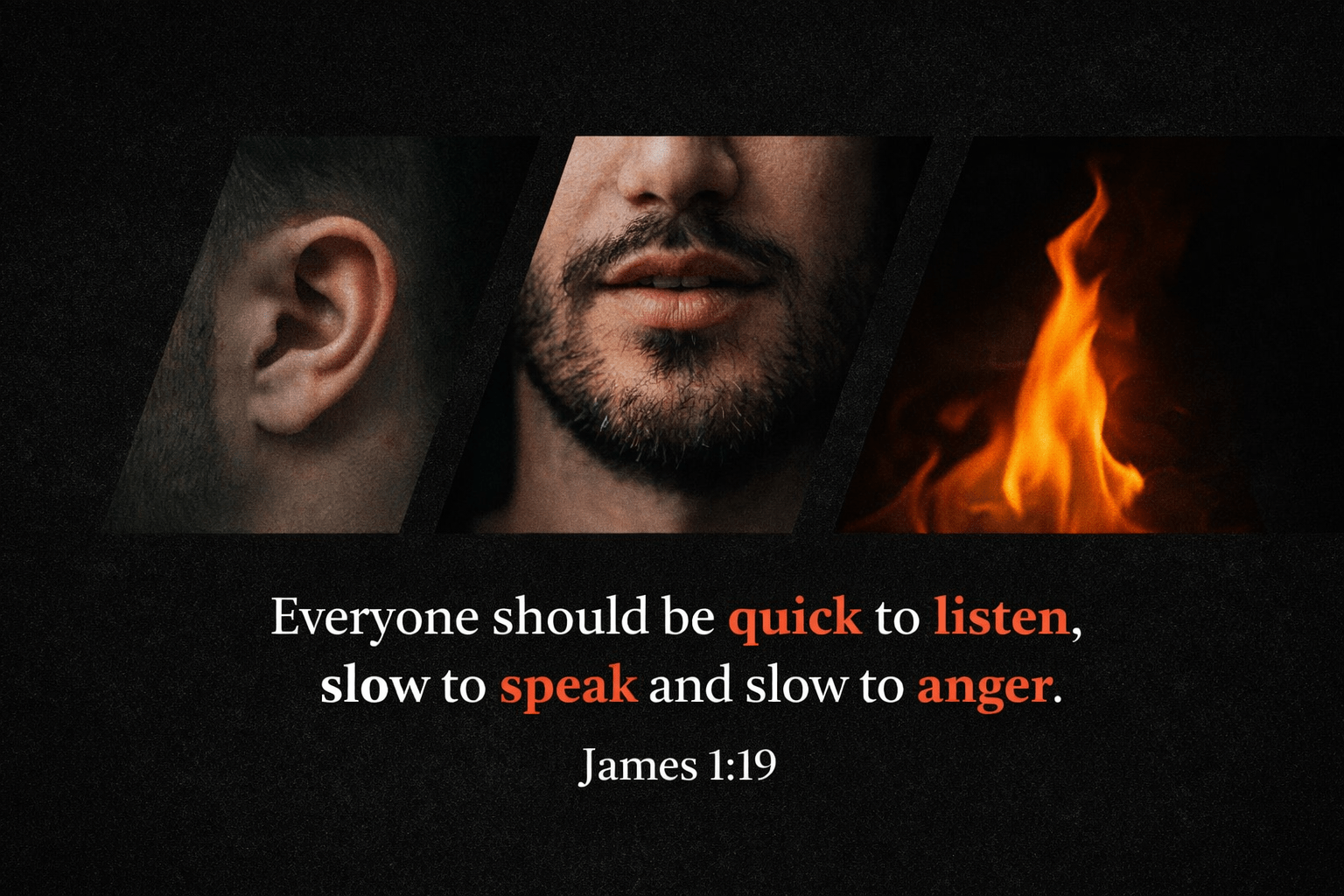
“Everyone should be quick to listen, slow to speak, and slow to anger.” (James 1:19)
The danger is not just being wrong.
The danger is being formed into someone who reacts out of impulse instead of discerns from wisdom.
So the question at hand is one of “spiritual formation“: who are we becoming?
A Practical Christian Discernment Filter
Here’s a simple guide that I think can be helpful to run through before believing or sharing something online:
- Is the claim specific and verifiable? We should ask if it contains real citations or if it simply relies on vague phrases like “experts say”, “new documents”, or “they don’t want you to know”.
- What am I feeling right now? We should ask if this is something we want to be true or if it confirms something we already believe, not because it’s necessarily wrong to have prior beliefs or personal interests in something, but because we know these make us susceptible to being misled.
- Is someone being accused of something? If the claim damages someone’s reputation, then the burden of proof should be higher than vague references, inference, or logical deduction, as Scripture says, “Only on the testimony of two or three witnesses…” (Deuteronomy 19:15).
- Is there independent confirmation? We should look to see if other sources are picking something up or if it’s only living on social media. This isn’t because “the experts” are some kind of “truth gatekeepers” (we should test their claims too), but because we are looking for credible witnesses. We want verified eye-witness reports over hearsay and speculation.
- Have I actually verified this? And we should ask if we are reacting faster than we can verify truth. We should take the time necessary to responsibly handle the truth, which means that we will sometimes “miss the news cycle” because something will “come and go” before it can be verified. But that’s okay.
A simple rule:
If you haven’t verified it, you shouldn’t amplify it.
The Ethics of Sharing Unverified Information
Sharing something unverified is not morally neutral because it impacts our relationships, other people’s emotions and reputations, and the framework that people use to understand their world and make choices that shape their life. Something as seemingly little as hitting the “share” button can have real impact on other people.
For example, sharing an unverified post has the potential to involve “bearing false witness”, “participating in gossip or slander”, failing to love our neighbor by assuming the worst about them, and even corrupting our own conscience by causing us to become comfortable with sharing misleading and harmful information.
On this last point, we want to hear Scripture’s warning:
“A worthless person, a wicked man goes around speaking dishonestly…” (Proverbs 6:12)
The more casually we share information, the less careful we become, which can lead us to become “okay” with speaking dishonestly, which is, in turn, an attribute wicked people. Again, this is an issue of spiritual formation because it shapes how we handle matters of truth and deception.
Being Slow to Speak in a Fast World
Social media rewards speed, outrage, and tribal loyalty, but the Spirit produces self-control, patience, and gentleness. Once again, sometimes moral outrage is warranted, and even necessary, but it cannot be so unless we first know that what we’re responding to is true. If something warrants our moral outrage today, then it will still warrant our moral outrage tomorrow, in a week, in a month, or in a year. We must take the time necessary to verify what we’re responding to before we invest our moral outrage into something.
Therefore, faithfulness often looks like not posting.
It looks like silence when others are shouting.
It looks like restraint when others are reacting.
Epistemological Humility: Knowing What You Don’t Know
We need to recognize that we are called to be humble, not only in behavior, but also in knowledge.
Scripture teaches:
“Knowledge puffs up, but love builds up.” (1 Corinthians 8:1)
“If anyone thinks he knows anything, he does not yet know it as he ought to know it.” (1 Corinthians 8:2)
There is a kind of “knowledge” that inflates the ego, especially in the age of instant information, but biblical wisdom admits that we don’t know as much as we think we do, that our perspective is limited, and that our instincts can mislead us.
At the same time, humility does not mean passivity.
Scripture also calls us to love the truth (2 Thessalonians 2:10), speak the truth boldly (Acts 4:29), and contend for the faith (Jude 3).
So how do we hold this tension?
Humility governs how form conclusions while courage governs what we do when truth is clear.
Tweet
A humble Christian recognizes that they can be wrong and is willing to hear other points of view. The danger is when we fail to recognize that we can be wrong and become unwilling to hear other points of views.
A courageous Christian is willing to stand on truth once truth becomes clear. The danger is when we are bold before something is verified and timid when truth is clear.
Wisdom is knowing the difference.
Application: Returning to the Example
Let’s return to the viral claim above about Erika Kirk. She is a real person being connected to a serious wrongdoing. There is no actual evidence presented, but only claims that there is evidence. And the claim spreads through its emotional appeal.
So, when this showed up in my feed, I paused. I noticed that the details didn’t cite any specific sources. Although the case references “new documents”, it doesn’t give any specifics. That’s a red flag. Then I thought about what emotions this brought out. I have strong feelings about the Epstein scandal and its coverup. So another red flag was raised because I know this makes me susceptible to manipulation. Then I noticed that Erika Kirk is being implicated in something that is morally reprehensible, which means that I must withhold judgment until there are multiple credible witnesses, which were not presented in this case.
When I looked online to test this claim, I not only didn’t find any “new documents” or credible sources corroborating this accusation, but I found that it existed solely in the rumor mills of social media.
So, while I’m open to hearing a case from credible sources, I can dismiss this case as false until credible information comes forward.
Final Thoughts: Becoming Trustworthy People
In a world of endless information, Christians are not called to be the fastest voices.
We are called to be trustworthy voices.
People whose words are careful, measured, and grounded in truth.
“Let your ‘Yes’ mean ‘Yes,’ and your ‘No’ mean ‘No.’” (Matthew 5:37)
That kind of integrity will rarely go viral, but I believe it will bear witness to something far more powerful than any trending story.
Before you believe something: Is it true?
Before you share something: Is it verified? Is it loving? Is it necessary?
And if the answer is unclear:
Be slow to speak.
 A Dedicated Faith
It is so hard to know what is true and what is a fabrication.
LikeLiked by 1 person
Absolutely! I think the difficulty in verifying truth claims is one of our greatest challenges today because it’s very hard to practice the faith when we don’t know what’s true from what’s false.
LikeLiked by 1 person