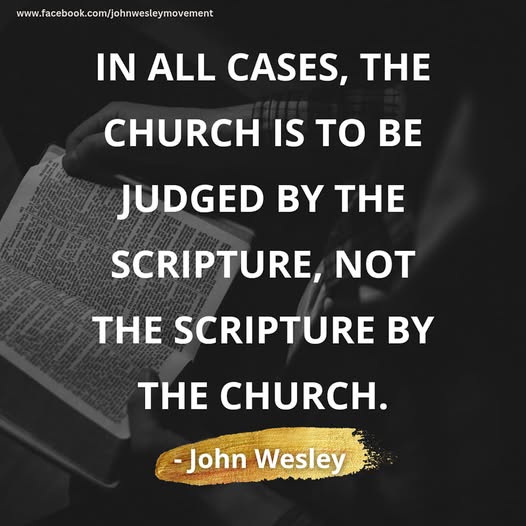
Authority matters. The question of “authority” has divided the Church, “east against west”, “Catholic against Orthodox”, and “Protestant against Catholic/Orthodox traditions”. So unity will always suffer so long as the question of authority remains ambiguous and unclear.
I believe the Protestant reformation re-introduced one central truth that was desperately needed within the Church. And that was the ancient idea that Scripture is the highest expression of the Lord’s authority within the Church on earth.
We see this idea across Scripture itself:
Isaiah 8:20 (CSB) — 20 Go to God’s instruction and testimony! If they do not speak according to this word, there will be no dawn for them.
The standard for evaluating any teaching or community has always been the revealed word, not institutional authority. This was one of the differences between Jesus and the Pharisees. Jesus appealed to Scripture, saying “have you not heard that it was written?” But the Pharisees appealed to “the traditions of the elders.”
Acts 17:11 (CSB) — 11 The people here were of more noble character than those in Thessalonica, since they received the word with eagerness and examined the Scriptures daily to see if these things were so.
Paul was an apostle, and yet, even his teachings were first examined by Scripture before they were accepted. And this was praised as “more noble” than others who did not practice this discipline.
Galatians 1:8 (CSB) — 8 But even if we or an angel from heaven should preach to you a gospel contrary to what we have preached to you, a curse be on him!
The gospel as delivered in Scripture stands above even apostolic personality or angelic revelation. Not only this, but gospel-innovation is accursed!
Matthew 15:3-9 (CSB) — 3 He answered them, “Why do you break God’s commandment because of your tradition? 4 For God said: Honor your father and your mother;, and, Whoever speaks evil of father or mother must be put to death. 5 But you say, ‘Whoever tells his father or mother, “Whatever benefit you might have received from me is a gift committed to the temple,” 6 he does not have to honor his father.’ In this way, you have nullified the word of God because of your tradition. 7 Hypocrites! Isaiah prophesied correctly about you when he said: 8 This people honors me with their lips, but their heart is far from me. 9 They worship me in vain, teaching as doctrines human commands.”
The pattern of tradition overriding Scripture is treated as corruption, not development.
There is an important caveat: Wesley’s formulation is sound as a structural claim — Scripture holds final authority — but it can be misread to imply that individual readers interpret Scripture against the church without any community accountability. That’s not true. Passages like 1 Timothy 3:15 (the church as “pillar and foundation of the truth”) and the conciliar reasoning of Acts 15 suggest the church plays a real, though subordinate, role in discernment.
So, Scripture judges the Church, not in isolation from it, but as being upheld within the one, universal, and apostolic Church. This is why it’s so important that the Church turns her ear to Scripture so that she can hear its judgments clearly, receive its corrections, and grow therein!

